Overview
An OpenGL based C++ graphics engine, implements Phong lighting, texture mapping and interactive scene. Supports multi-shader rendering pipeline, cubemap skybox, post-processing effects in framebuffer, and light positioning and object transformation tool system.
Screenshots
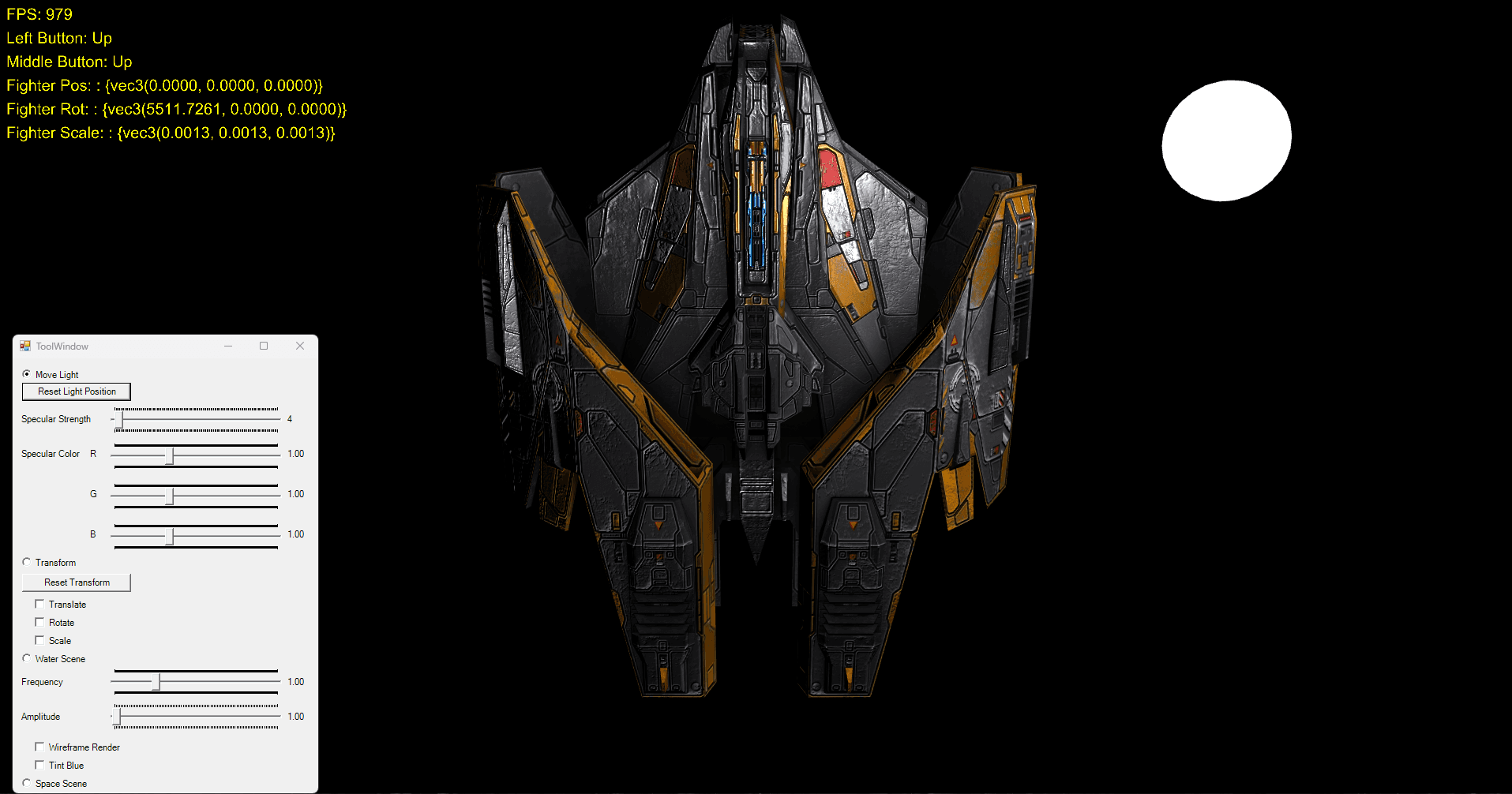
Move Light Tool
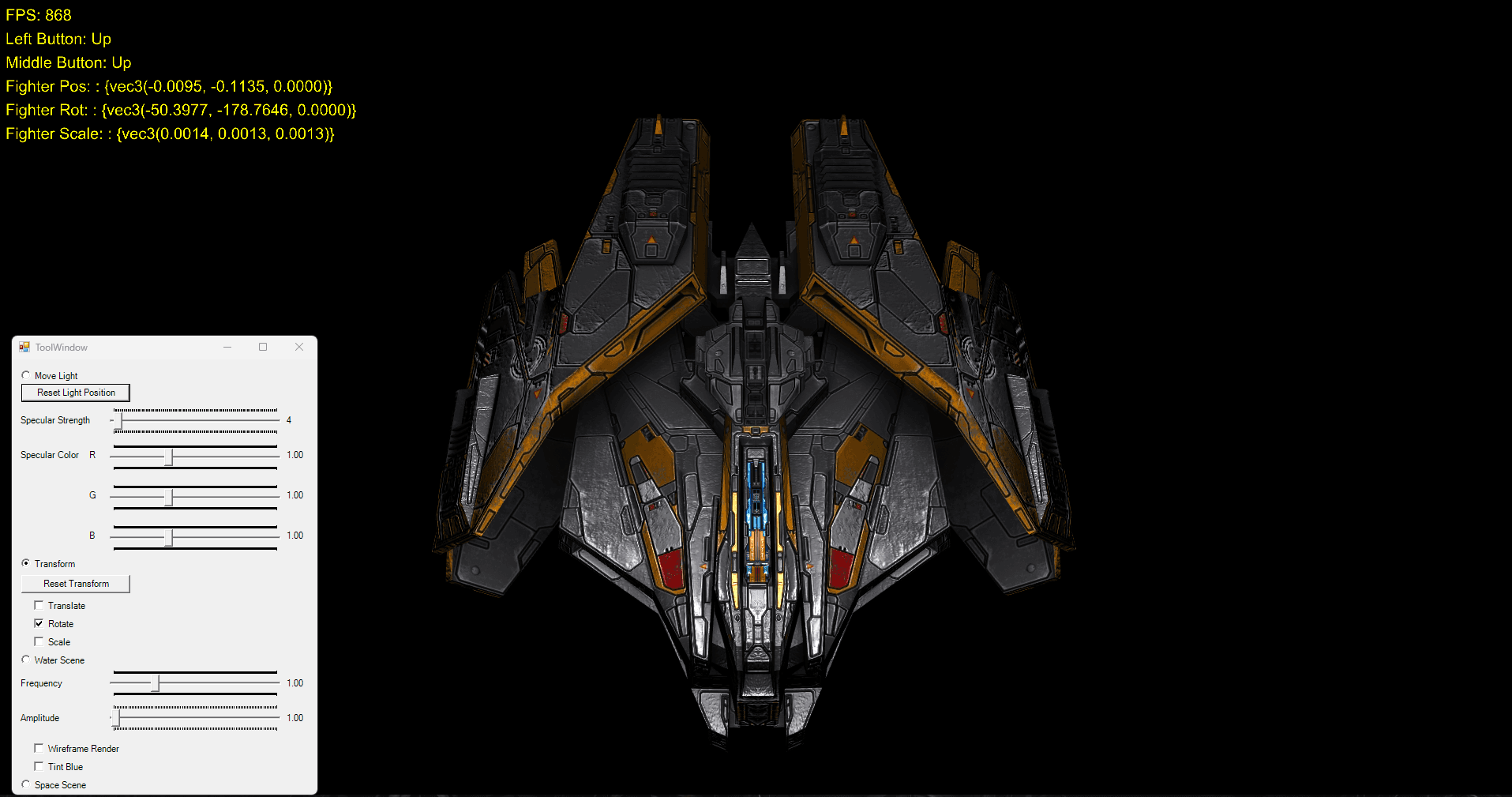
Transform Tool
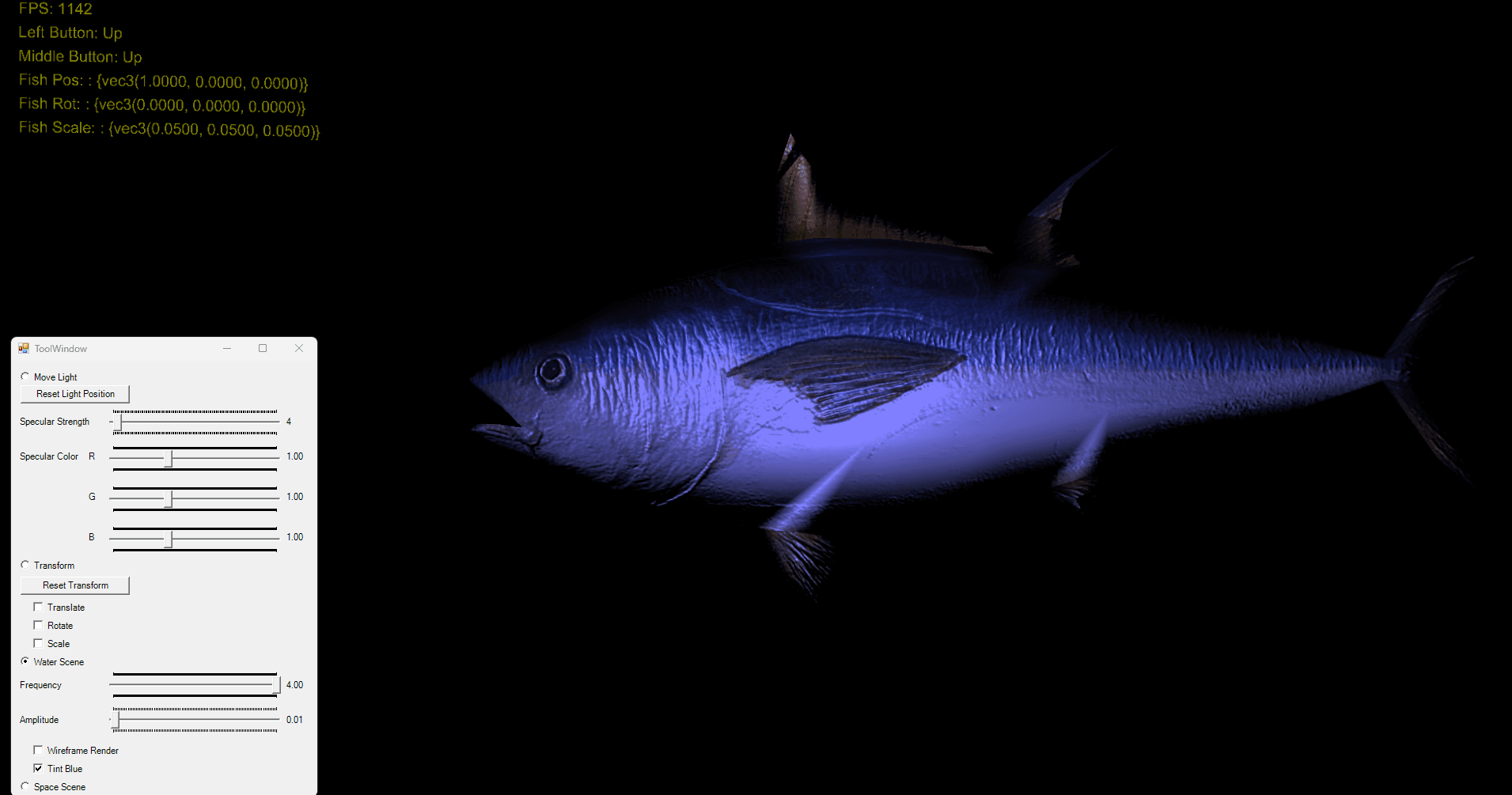
Water Scene
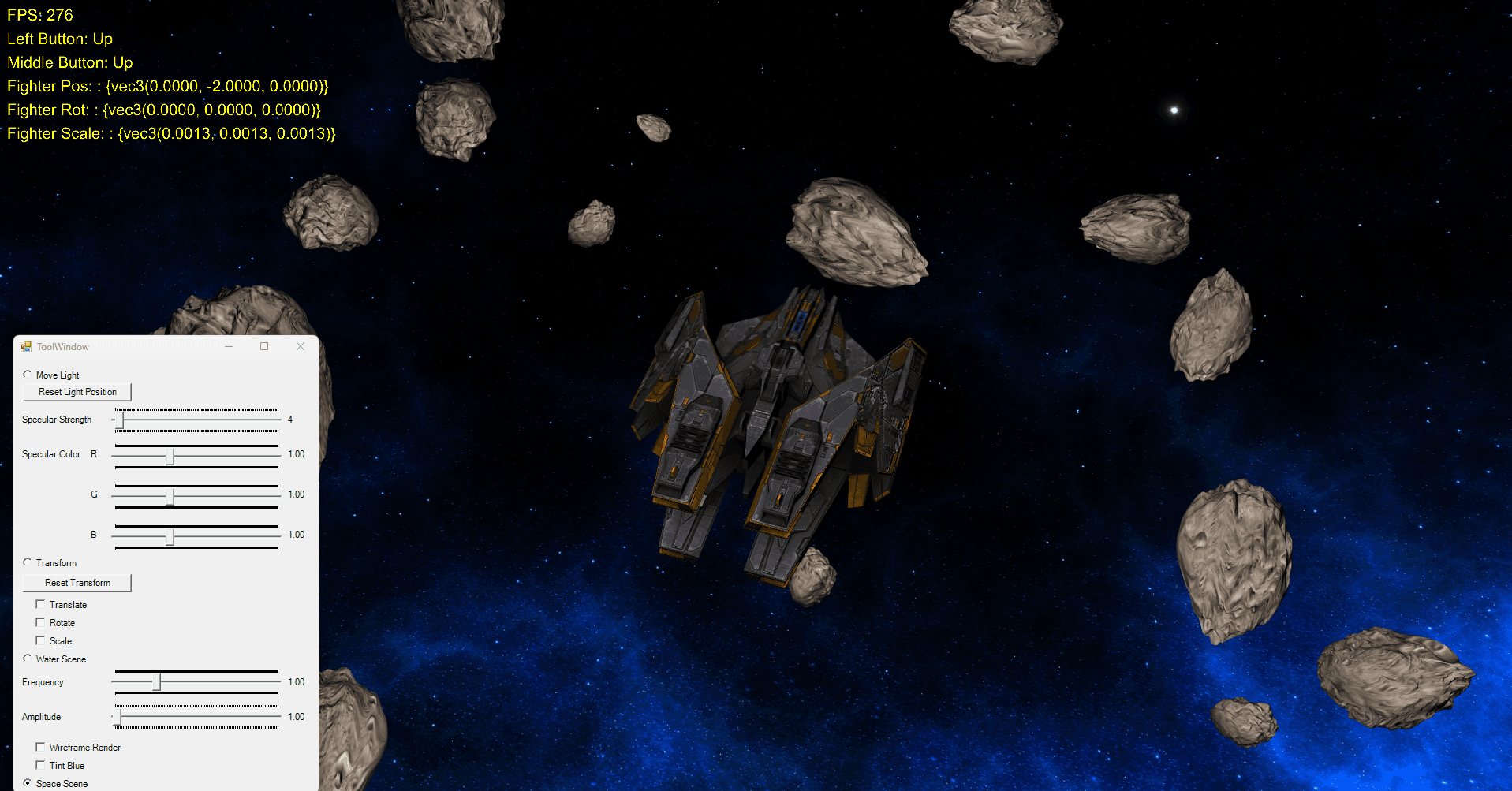
Space Scene
Project Metrics
OpenGL
GPU Programming
Phong
Lighting Model
VAO/VBO
Buffer Objects
Framebuffer
Post-Processing
Key Features
Phong Lighting
Phong shading per-pixel with ambient, diffuse, and specular values computed in fragment shaders. Light position, color and material specular strength can be configured and adjusted with interactive controls.
Hardware-Accelerated Rendering
OpenGL pipeline with Vertex Array Objects (VAOs) and Vertex Buffer Objects (VBOs) to manage efficiently the graphics memory of the GPUs. Optimised draw calls with state management and resource cleanup.
Texture Mapping Pipeline
Multi-channel texture support with diffuse and specular map sampling, proper texture unit allocation, and image loading integration for material rendering.
Post-Processing Effects
Framebuffer rendering with wave distortion effects and color tinting through fragment shader calculations.
GLSL Shader Programming
Custom vertex and fragment shader compilation and linking with uniform variable management for dynamic parameter updates and mathematical lighting calculations.
3D Model Loading
OBJ file format support with vertex data parsing such as positions, normals and texture coordinate. Combines with material loading to make full mesh render pipeline.
Architecture
- →OpenGL Pipeline: Hardware-accelerated rendering with Vertex Array Objects (VAOs) and Vertex Buffer Objects (VBOs) for efficient GPU memory management
- →State Management: OpenGL context handling with proper render state transitions and GPU resource optimization
- →Shader Programming: GLSL vertex and fragment shader compilation with uniform variable binding and texture sampler management
- →Texture System: Texture binding with diffuse and specular map support, proper filtering, and image loading integration
- →Rendering Pipeline: Integrated system with color rendering, Phong lighting calculations, skybox environment, and framebuffer post-processing
Challenges & Solutions
Optimizing rendering performance with multiple models and textures
Organized VAO creation and binding to minimize state changes, implemented proper texture unit management, and optimized draw calls to maintain smooth frame rates across different scenes.
Managing complex scene rendering with multiple tool modes
Designed modular scene rendering system supporting different tool modes (Move Light, Transform, Water Scene, Space Scene) with proper state management and resource sharing between modes.
Implementing framebuffer post-processing pipeline
Created framebuffer objects with color and depth attachments, implemented vertex buffer for screen quad rendering, and integrated wave distortion effects with configurable frequency and amplitude parameters.
What I Learned
Learned OpenGL graphics pipeline including vertex array objects, buffer management, and shader programming with GLSL compilation and linking
Gained expertise in Phong lighting model implementation with per-pixel ambient, diffuse, and specular component calculations in fragment shaders
Developed knowledge of texture mapping techniques including multi-channel sampling, proper texture unit binding, and UV coordinate processing
Learned framebuffer operations for post-processing effects including framebuffer object setup and quad rendering for visual effects
Acquired knowledge of 3D mathematics including matrix transformations, vector operations, and lighting equation implementations for realistic rendering
Gained experience with graphics optimization techniques including VAO/VBO state management, draw call efficiency, and GPU memory resource utilization
Future Improvements
Add shadow mapping with depth buffer techniques for realistic shadow casting from dynamic light sources
Implement deferred rendering for efficient multi-light scenarios with G-buffer optimization
Add HDR rendering with tone mapping operators and bloom effects for realistic lighting ranges
Explore more projects